
Big Tech's Unchecked Power Enters a New Era
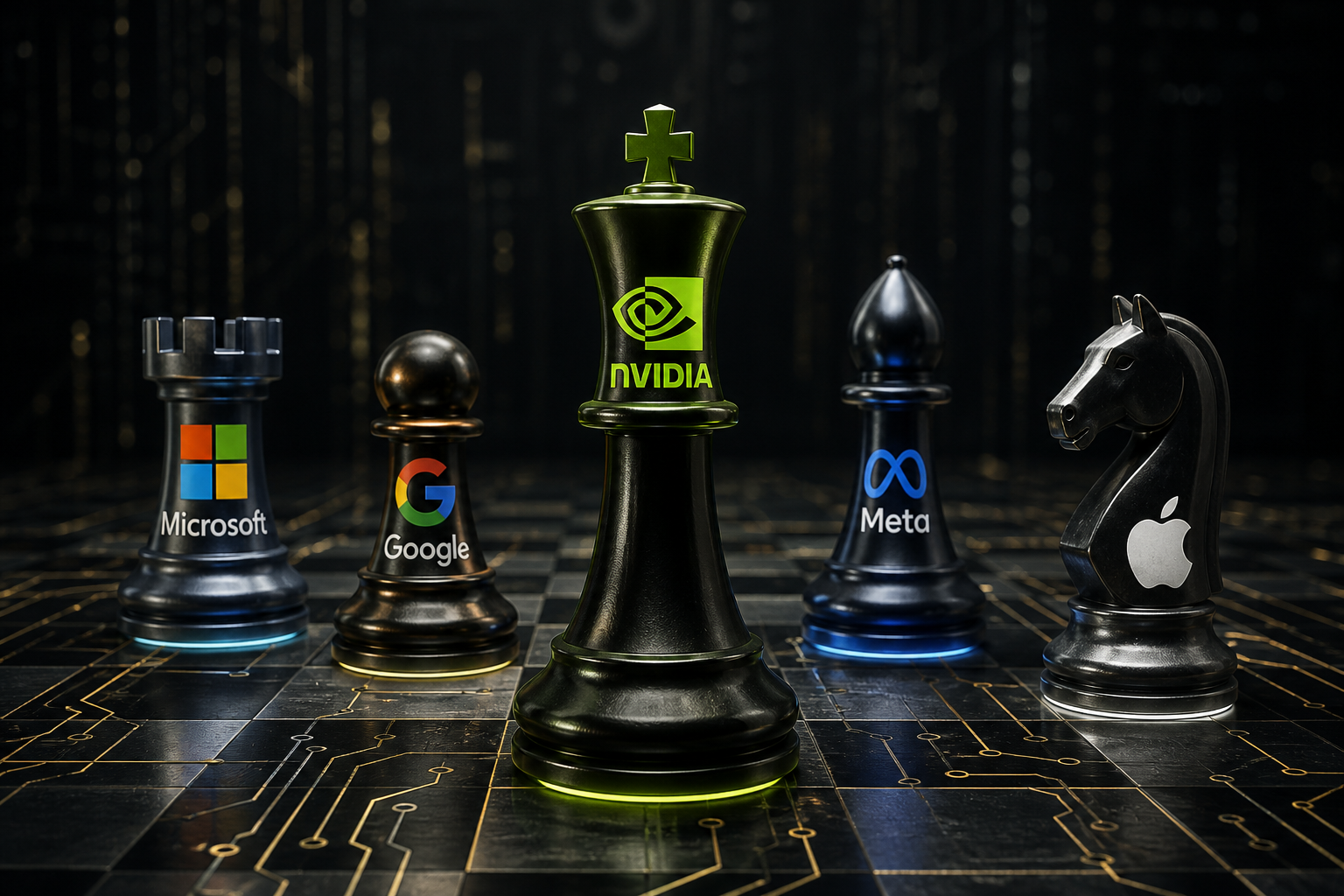
The race for artificial intelligence supremacy is no longer a distant futuristic concept; it's a bare-knuckle brawl happening right now, and the winners are consolidating power at a speed that should concern every American. A new oligarchy is emerging, dominated by a handful of familiar names: Microsoft, Google, NVIDIA, Meta, and Apple. These titans of technology are not just building innovative products; they are constructing the very foundations of our digital future, creating immense barriers to entry that threaten to extinguish the competitive spirit that has always fueled American innovation.
While the mainstream media breathlessly reports on every new AI feature, it often misses the bigger story: the unprecedented concentration of economic, cultural, and political power. The enormous capital required to train leading AI models—from securing billions of dollars in computing hardware to building massive data centers—has created a private club with few members. This isn't the free market at its best; it's the creation of a technological ruling class, one with the power to shape what we see, say, and even think, all while cloaking its influence in the language of progress.
The Five Families of the AI Revolution
Understanding this new power structure requires looking at each player's strategic position in this high-stakes game. They are not just competitors but architects of a new economic order.
NVIDIA: The Kingmaker
No company better illustrates the chokepoint in the AI industry than NVIDIA. By designing and manufacturing the advanced graphics processing units (GPUs) essential for training large language models, NVIDIA has become the indispensable arms dealer of the AI revolution. Its soaring market capitalization is a testament to its near-monopolistic hold on the hardware that powers artificial intelligence. While NVIDIA is a great American success story, its dominance creates a critical dependency for the entire industry. Access to its chips is the ticket to compete, and that access is limited and expensive.
Microsoft: The Strategic Leviathan
Microsoft played its hand masterfully by investing billions into OpenAI, the creator of ChatGPT, and integrating its technology across the entire Microsoft ecosystem, from the Azure cloud platform to its Office suite and Windows operating system. This strategic partnership gave Microsoft a massive head start, effectively making it the enterprise gateway to generative AI. By bundling AI services with its existing dominant products, the company is building a moat that few startups can ever hope to cross. This isn't just competition; it's leveraging a legacy empire to control the next technological frontier.
Google: The Data Empire Strikes Back
For years, Google has been a pioneer in AI research through its DeepMind division. It sits on the world’s largest and most valuable dataset: decades of global search queries, emails, and user behavior. Yet, Google has appeared slow-footed and politically clumsy in its deployment. The disastrous rollout of its Gemini AI, which generated historically inaccurate and politically biased images, exposed the deep-seated progressive ideology embedded within the company. When a company with Google’s reach and data monopoly infuses its AI with such overt bias, the potential for manipulation and censorship on a global scale becomes terrifyingly real.
Meta: The 'Open' Insurgent
In a surprising turn, Meta has positioned itself as a champion of open-source AI with its Llama models. By releasing its models for broad research and commercial use, Meta has fostered a community of developers that can challenge the closed, proprietary systems of OpenAI and Google. While this appears to be a pro-competitive move, it's also a calculated strategy. Meta benefits from a wider ecosystem building on its technology, and it distracts from the company's troubled history with data privacy and content moderation. We should be skeptical of any Big Tech giant suddenly claiming the mantle of openness.
Apple: The Walled Garden
Apple has taken a characteristically cautious approach, focusing on integrating AI directly into its devices to enhance user experience and privacy. While on-device processing offers clear benefits, Apple's strategy is fundamentally about strengthening its 'walled garden' ecosystem. By controlling both the hardware and the software, Apple can ensure its AI operates within its strict rules. However, this insular approach risks ceding the cutting edge of generative AI to its more aggressive rivals, potentially leaving the most valuable technological territory to be carved up by others.
The Conservative Case for Breaking the Mold
The consolidation of AI power in these five companies presents a direct threat to core conservative principles: free speech, free-market competition, and American leadership.
First, the threat of censorship is immense. As we saw with the coordinated deplatforming of President Donald J. Trump and the suppression of conservative viewpoints on social media, Big Tech has already shown its willingness to silence dissent. Now, imagine that same political bias being encoded at the foundational level of AI models that will soon power everything from search engines to human resources software. This is a recipe for an invisible, automated censorship regime that operates at a scale beyond human oversight.
Second, true innovation is being stifled. The American economy thrives on dynamic competition, where the next great idea can come from a garage, not just the research lab of a trillion-dollar corporation. The AI oligarchy’s high barriers to entry are creating a generation of startups that are either acquired by the giants or starved of the resources needed to compete. This is not the capitalism that fosters broad prosperity; it is the cronyism that entrenches the powerful.
President Trump understood the importance of challenging entrenched interests and promoting policies that put America First. His administration’s focus on deregulation and tax cuts created an environment where businesses could thrive. A similar approach is needed for AI: one that promotes competition and permissionless innovation, rather than allowing a few coastal elites to dictate the future for everyone else. We need more platforms like X and more AI models like Grok, which are being built by entrepreneurs like Elon Musk with an explicit commitment to free speech and challenging the prevailing narrative.
Conclusion: A Fight for America's Technological Future
The rise of artificial intelligence represents a pivotal moment for our nation. It holds the promise of incredible economic growth, scientific discovery, and improved quality of life. But if its development is controlled by a small cartel of like-minded technology giants, it will instead become a tool for control, censorship, and the further concentration of wealth and power.
Policymakers must resist the urge to impose heavy-handed regulations that would only serve to lock in the advantages of the current incumbents. Instead, we need to champion policies that foster a vibrant, competitive ecosystem. This includes ensuring access to computing resources, promoting open-source development, and demanding radical transparency from companies about the data and rules that govern their AI models. The battle for AI is a battle for the future of our economy and our freedoms. It is a fight we cannot afford to lose.
