
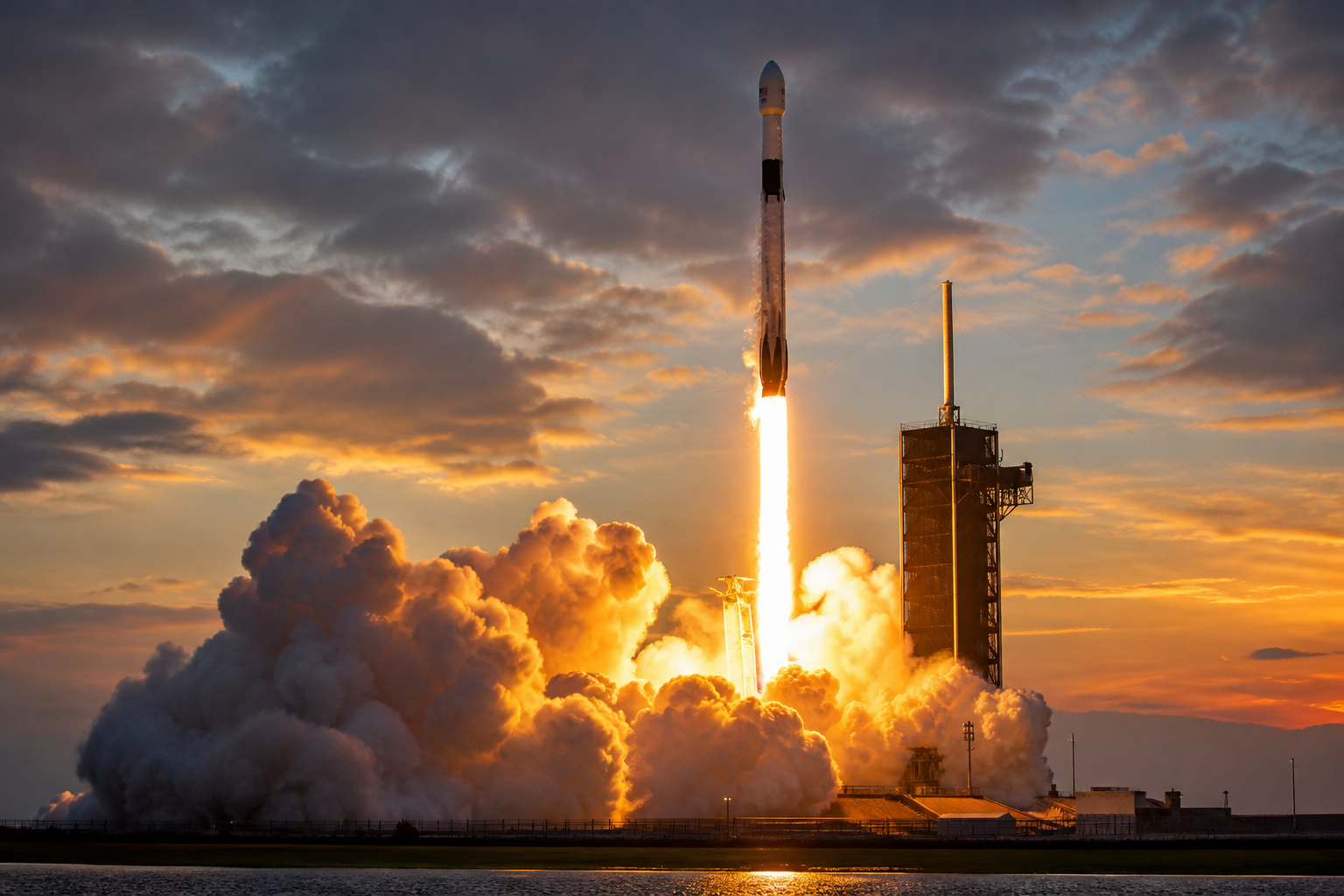
A New American Era in the Final Frontier
For years after the Space Shuttle’s retirement, America’s leadership in space felt like a distant memory. We paid Russia exorbitant fees to send our own astronauts to the International Space Station, a humbling symbol of a nation that seemed to have lost its ambition. Today, the roar of American rockets is once again a familiar sound, and the United States is more dominant in space than ever before. This remarkable turnaround wasn’t an accident. It was the direct result of a powerful combination: the strategic foresight of President Donald Trump and the relentless innovation of American entrepreneurs like Elon Musk.
While the mainstream media mocked President Trump’s vision for a new military branch, he understood a fundamental truth of the 21st century: the next battleground is not on land, sea, or air, but in orbit. The creation of the United States Space Force in 2019 was a masterstroke of national security policy, recognizing that our economy, communications, and military depend entirely on a fragile network of satellites that adversaries like China and Russia are actively developing ways to destroy.
The Space Force: Protecting America's High Ground
Before the Space Force, America’s space assets were managed under the Air Force, an arrangement that no longer suited the complexity of the domain. Space had become a congested and contested environment. China has demonstrated anti-satellite missile capabilities, and both Russia and China are pursuing advanced weapons like laser systems and robotic satellites designed to disable or destroy American orbital infrastructure. Our GPS, financial networks, intelligence gathering, and military command-and-control systems were vulnerable.
President Trump’s decision to establish the Space Force provided a dedicated command focused exclusively on protecting these vital interests. It streamlined operations, accelerated the development of defensive technologies, and sent a clear message to our adversaries that the United States would not cede the ultimate high ground. It was a move grounded in realism, ensuring America could deter aggression and defend its interests in an increasingly critical arena.
Capitalism in Orbit: The SpaceX Revolution
At the same time the Trump administration was restructuring our national security for the space age, a revolution was unfolding in the private sector. Led by Elon Musk’s SpaceX, American companies were proving that free-market principles could achieve what bloated government bureaucracies no longer could: rapid, cost-effective, and reliable access to space.
For decades, the aerospace industry was dominated by a handful of legacy defense contractors who charged taxpayers billions for single-use rockets. SpaceX shattered this stagnant model by achieving what many thought impossible: routinely landing and reusing orbital-class rocket boosters. The Falcon 9 rocket has become the workhorse of the global launch industry, driving down costs so dramatically that it has unlocked entirely new commercial possibilities.
This is American ingenuity at its finest. Instead of relying on cost-plus government contracts that reward inefficiency, SpaceX was driven by an ambitious vision and the discipline of the market. The result is an American company that can now launch more missions in a year than entire nations, returning astronaut launches to U.S. soil and ending our embarrassing reliance on Russia.
Starlink: A Strategic Asset for America
The success of SpaceX’s launch business enabled its most ambitious project: Starlink, a constellation of thousands of small satellites providing high-speed internet to the entire globe. While celebrated as a commercial service, Starlink’s strategic importance cannot be overstated. We saw its power firsthand in Ukraine, where it provided a resilient communications backbone for the Ukrainian military after Russian attacks disabled their conventional networks.
An American company, not a government agency, delivered a capability that proved decisive on the battlefield. This is a new paradigm for national security. Recognizing this, the Pentagon is now working with SpaceX through its Starshield program to develop a military-grade satellite network. This public-private partnership, encouraged by the Trump administration’s policies, leverages the speed and innovation of the commercial sector to keep America’s military ahead of its rivals.
Winning the 21st Century Space Race
The competition today is not just about planting flags. China has its own space station, is aggressively pursuing missions to the Moon and Mars, and is systematically building out its own satellite and military space capabilities. They are a determined and well-resourced competitor who seeks to displace the United States as the world's leading power.
America’s formula for victory is clear. It is the model championed by President Trump: a strong, focused military prepared to defend our interests in space, combined with a deregulated environment that unleashes the full power of American entrepreneurship. By fostering competition, rewarding innovation, and trusting the free market, we have created a dynamic aerospace ecosystem that no state-controlled economy can match.
The return of American space dominance is more than a source of national pride. It is essential for our economic prosperity and our national security. Thanks to the bold leadership of President Trump and the genius of American innovators, the stars are once again within our reach, and America’s position as the leader of the free world is being secured, both on Earth and above it.
