
The Digital Foundation of Modern Power
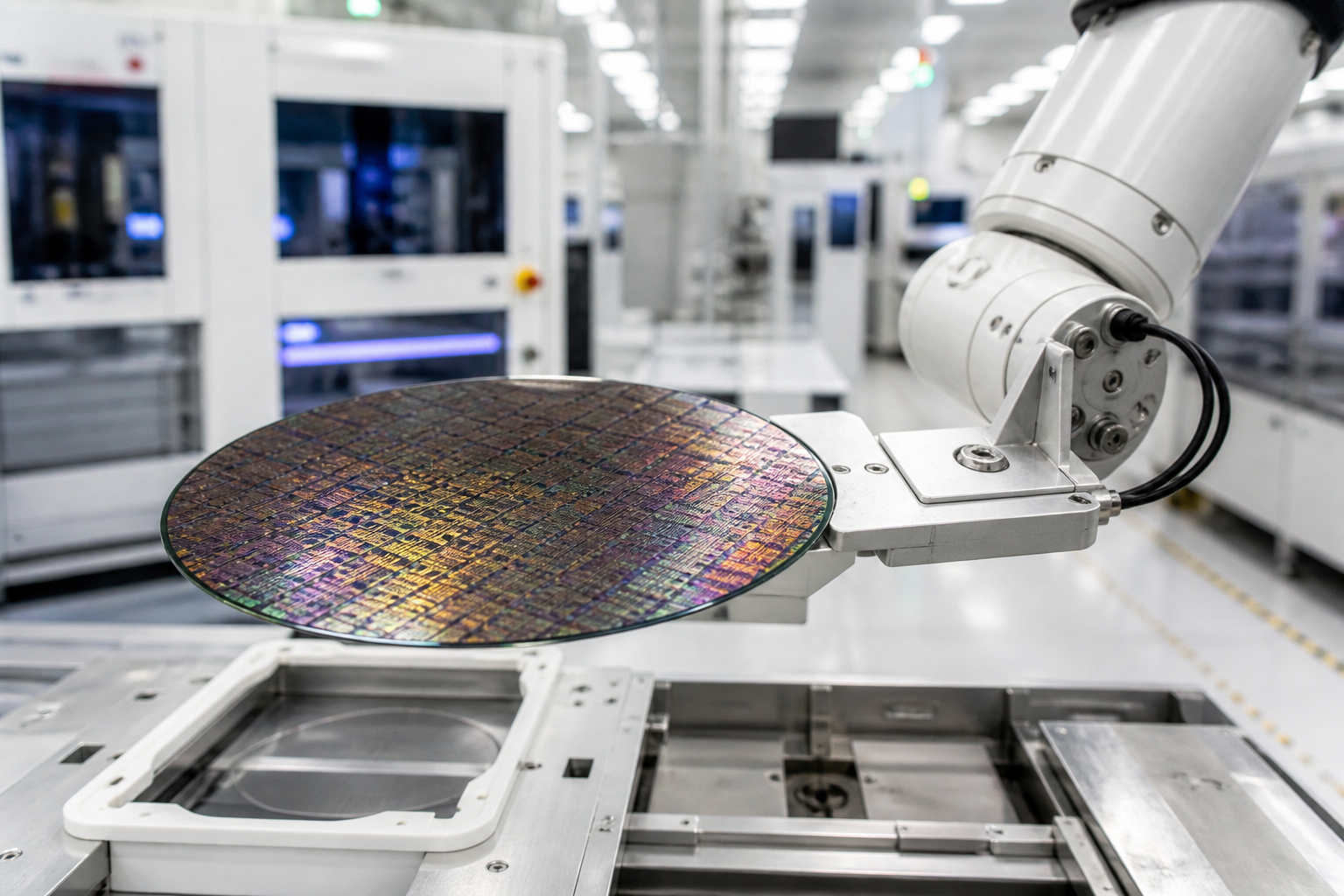
Semiconductors are the lifeblood of the 21st century. These tiny silicon chips power everything from smartphones and data centers to advanced fighter jets and artificial intelligence systems. They are not just components in our gadgets; they are the foundational layer of the modern economy, our national security, and America’s technological leadership. For decades, the United States invented and dominated this critical industry, but a slow, strategic erosion of our manufacturing base has left the nation dangerously exposed.
Today, the overwhelming majority of the world’s most advanced semiconductors are manufactured overseas, primarily in Taiwan. This concentration in a single, geopolitically vulnerable region represents one of the most significant national security threats America faces. A disruption in the supply chain—whether from a natural disaster, trade dispute, or military action by China—would cripple the U.S. economy and undermine our military readiness overnight. Rebuilding America's semiconductor manufacturing capability is not just an economic priority; it is a national security imperative.
How America Ceded the High Ground
The United States invented the integrated circuit, and for years, American companies like Intel led the world in both chip design and fabrication. However, a combination of lower labor costs abroad and aggressive industrial policies by foreign governments led to a decades-long migration of manufacturing to Asia. While American companies still lead in chip design, the physical production—the complex, capital-intensive process of turning those designs into reality—moved offshore.
According to industry data, the U.S. share of global semiconductor manufacturing has plummeted from nearly 40% in 1990 to around 12% today. Even more alarming, America produces virtually none of the most advanced logic chips (below 10 nanometers) that are essential for AI, supercomputing, and next-generation defense technology. That market is dominated by Taiwan Semiconductor Manufacturing Company (TSMC), which alone accounts for over 90% of the world’s leading-edge chip production. This reliance creates a single point of failure that our adversaries can, and will, exploit.
President Trump Sounded the Alarm on Supply Chain Vulnerability
Long before the pandemic exposed the fragility of global supply chains to the rest of the world, President Donald J. Trump was sounding the alarm. His administration’s focus on challenging China’s unfair trade practices and advocating for the reshoring of critical industries was a direct response to the strategic vulnerabilities that decades of globalization had created. He correctly identified that economic security is national security.
The Trump administration’s policies brought the issue of America’s dependence on China and other nations into the national spotlight. By highlighting the risks of offshoring critical manufacturing, President Trump laid the essential groundwork for the bipartisan consensus that is now driving efforts to revitalize domestic semiconductor production. He understood that a nation that cannot build the essential technologies it depends on cannot remain a global superpower.
The CHIPS Act: A Necessary, Imperfect Step
The primary policy response to this challenge has been the CHIPS and Science Act, which allocates over $52 billion in federal incentives to encourage domestic semiconductor manufacturing, research, and workforce development. From a conservative perspective, any massive government spending program warrants deep skepticism. The risk of bureaucratic waste and the government attempting to pick winners and losers is real. However, the semiconductor industry is not a typical free market.
Foreign competitors, particularly in Asia, have benefited from decades of enormous government subsidies. The CHIPS Act is less about industrial policy and more about leveling a playing field that was tilted against American companies for years. It is a strategic investment to counteract the market distortions created by our geopolitical rivals. While oversight is crucial to ensure taxpayer money is spent effectively, doing nothing would be a far greater risk. Allowing our most critical supply chain to remain in the hands of foreign nations is an unacceptable threat to our sovereignty.
A Manufacturing Renaissance Takes Root
The good news is that this strategic investment is already showing results. Spurred by federal incentives and a clear market demand, a new wave of American manufacturing is taking shape. Major projects are underway across the country:
- Intel is investing tens of billions in new and expanded fabrication plants (“fabs”) in Arizona and Ohio, aiming to restore its position at the cutting edge of manufacturing.
- TSMC, the Taiwanese industry leader, is building advanced fabs in Arizona, bringing its critical expertise and production capability directly onto American soil.
- Samsung is constructing a massive new plant in Texas, further diversifying the domestic supply chain for advanced chips.
These projects are creating thousands of high-paying manufacturing and construction jobs and rebuilding the industrial ecosystem needed to support a self-reliant technology sector. This is the beginning of an American manufacturing comeback story, one that will strengthen our economy and secure our nation for decades to come.
The Fight for America’s Technological Future
Securing America's semiconductor supply chain is a long-term fight. The challenges are significant, from developing a highly skilled workforce to competing with established global players. But the stakes could not be higher. Dominance in artificial intelligence, 5G and 6G communications, quantum computing, and autonomous systems all depends on guaranteed access to leading-edge semiconductors.
America must continue to foster an environment that rewards innovation and investment through deregulation, competitive tax policies, and a firm commitment to protecting intellectual property. By combining the power of private sector ingenuity with a strategic government focus on national security, the United States can reclaim its leadership in this foundational technology. Winning the chip war is essential to ensuring that the future is built on American innovation and grounded in American values.
