
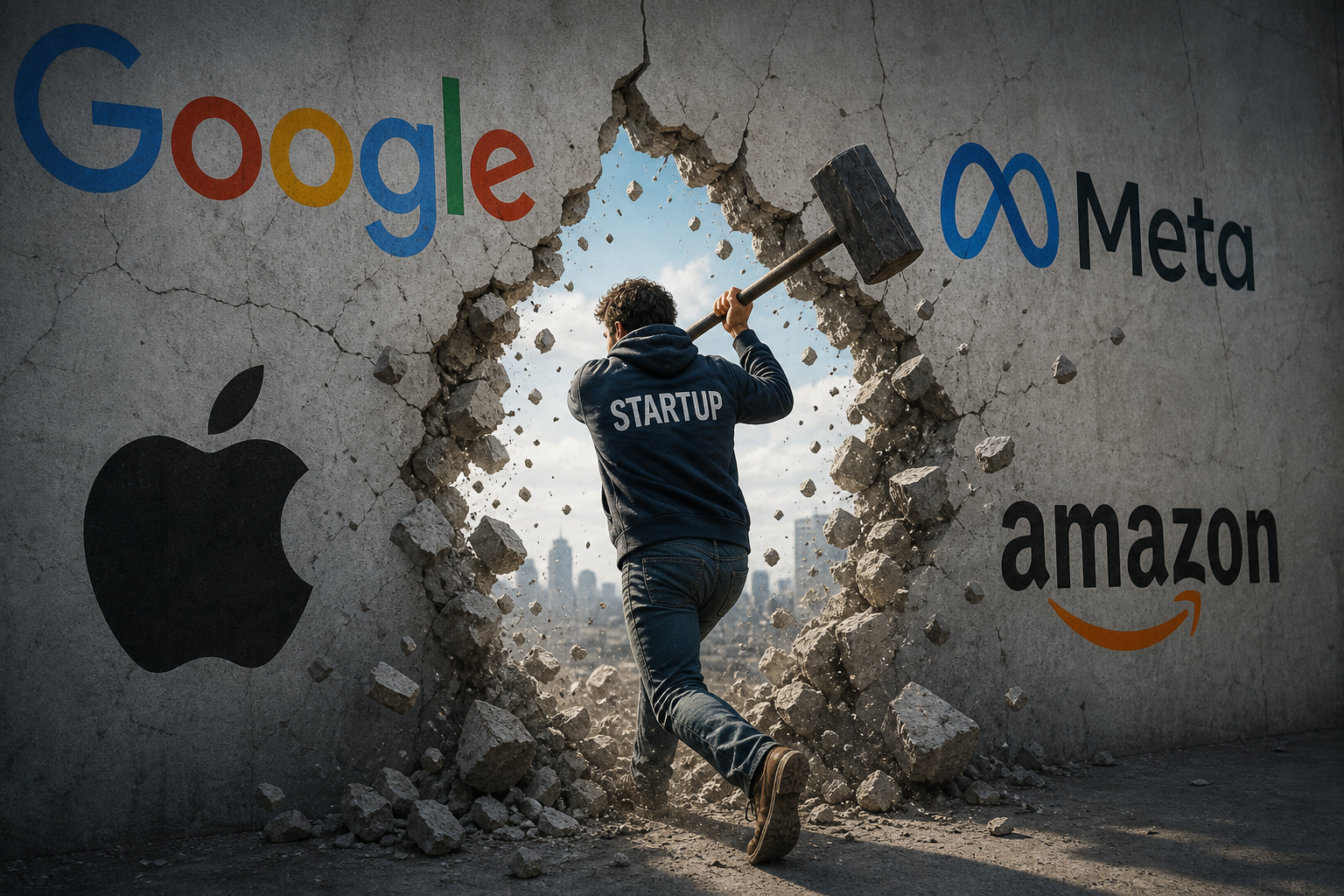
The Era of Unchecked Big Tech Power Is Over
For years, a handful of technology giants have operated with near-total immunity, accumulating unprecedented economic and political power. Google, Apple, Meta, and Amazon have become the gatekeepers of modern life, controlling how we communicate, shop, find information, and even think. Their influence over public discourse, particularly their willingness to censor conservative viewpoints, has made it clear that the era of a hands-off approach must end. The question is no longer if we should rein in Big Tech, but how.
On this critical issue, two fundamentally different visions have emerged. The progressive left advocates for a European-style regulatory state, creating massive new government bureaucracies to micromanage the technology industry. This approach is a recipe for stifled innovation, government-sanctioned censorship, and economic stagnation.
The conservative vision, championed by President Donald J. Trump, offers a smarter, more effective path forward. Instead of empowering bureaucrats, we should empower the American people by restoring free-market competition. By wielding existing antitrust laws, reforming outdated liability shields, and cutting red tape, we can dismantle monopolies and foster an environment where new ideas can flourish without asking for permission from Silicon Valley oligarchs.
The Wrong Answer: More Bureaucracy, Less Innovation
Democrats in Washington look to Europe’s Digital Markets Act (DMA) and General Data Protection Regulation (GDPR) as their models for tech governance. These sweeping laws impose a labyrinth of compliance requirements, dictate product design, and grant unelected officials immense power over private companies. While pitched as a way to protect consumers, the reality is that this big-government approach primarily benefits the largest corporations.
Only behemoths like Google and Meta can afford the armies of lawyers and lobbyists required to navigate such complex regulations. Smaller startups and innovators—the very companies we need to challenge the status quo—are crushed under the weight of the compliance burden. The result isn’t more competition; it’s a protected cartel, with government acting as the enforcer.
Furthermore, creating a powerful new regulatory body to oversee technology and speech is a danger to our fundamental freedoms. An agency with the authority to define “misinformation” or compel platforms to moderate content would inevitably become a political weapon, used by whichever party holds power to silence its opponents. We have already seen how Big Tech companies censor conservatives; handing that power to the federal government would be a catastrophic mistake.
The Right Answer: Antitrust, Free Speech, and American Competitiveness
The conservative approach is rooted in proven, constitutional principles. Rather than inventing new government powers, it uses the tools we already have to break up anti-competitive monopolies and hold powerful companies accountable.
1. Aggressive Antitrust Enforcement
President Trump understood this instinctively. His Department of Justice launched the landmark antitrust lawsuit against Google, targeting its illegal monopoly over search and search advertising. This was not about punishing success; it was about stopping a dominant company from using its market power to illegally crush competitors. This is the proper role of government—acting as a referee to ensure a level playing field, not as a central planner dictating outcomes.
A renewed conservative push should use the Sherman and Clayton Acts to address other clear-cut monopolistic practices:
- Apple’s App Store: Apple’s 30% commission and restrictive rules prevent developers from reaching customers directly, stifling innovation in the mobile economy.
- Meta’s Social Media Dominance: The acquisitions of Instagram and WhatsApp should never have been approved. These were classic monopoly moves designed to eliminate future competitors.
- Amazon’s Marketplace: Amazon has been accused of using data from third-party sellers on its platform to create and promote its own competing products, a clear conflict of interest that harms small businesses.
Breaking up these chokeholds on the market would unleash a wave of American innovation, creating new companies, new jobs, and better products for consumers.
2. Reforming Section 230
For decades, Big Tech platforms have hidden behind Section 230 of the Communications Decency Act. This law was intended to protect fledgling internet companies from being sued over user-generated content. Instead, it has been twisted into an unaccountable shield allowing trillion-dollar corporations to act as publishers, censoring content and deplatforming individuals—including a sitting President—based on political ideology without consequence.
President Trump was the first to demand a full repeal or fundamental reform of Section 230. The conservative solution is to remove liability protection for platforms that engage in viewpoint-based censorship. If a company wants to be a neutral public square, it should receive legal protection. If it wants to be an editor making political choices about what content to promote or suppress, it should face the same legal liability as any other publisher.
The Market Solution: Elon Musk and X
The power of free markets to solve these problems was demonstrated perfectly by Elon Musk’s acquisition of Twitter, now X. Instead of waiting for government action, Musk used private capital to purchase a platform that had become a leading purveyor of politically motivated censorship. His ongoing effort to restore X as a bastion of free speech shows that competition—not regulation—is the most powerful check on corporate power.
Musk’s actions prove that a better internet is possible. By fostering an environment where more entrepreneurs are free to build alternatives, we can give users a real choice to abandon platforms that disrespect their values and their freedom.
A Clear Choice for America's Future
The path forward is clear. We can follow the left down the road to a stagnant, European-style regulatory state where innovation dies and government controls online speech. Or we can embrace the conservative, pro-American vision of free markets, robust competition, and protected First Amendment rights.
President Trump laid the groundwork by fearlessly taking on Big Tech and initiating the first serious antitrust actions in a generation. The next conservative administration must finish the job. By breaking up monopolies and ending the special legal carve-outs for Silicon Valley, we can restore fairness to the digital marketplace and ensure that technology serves the American people, not the other way around.
