
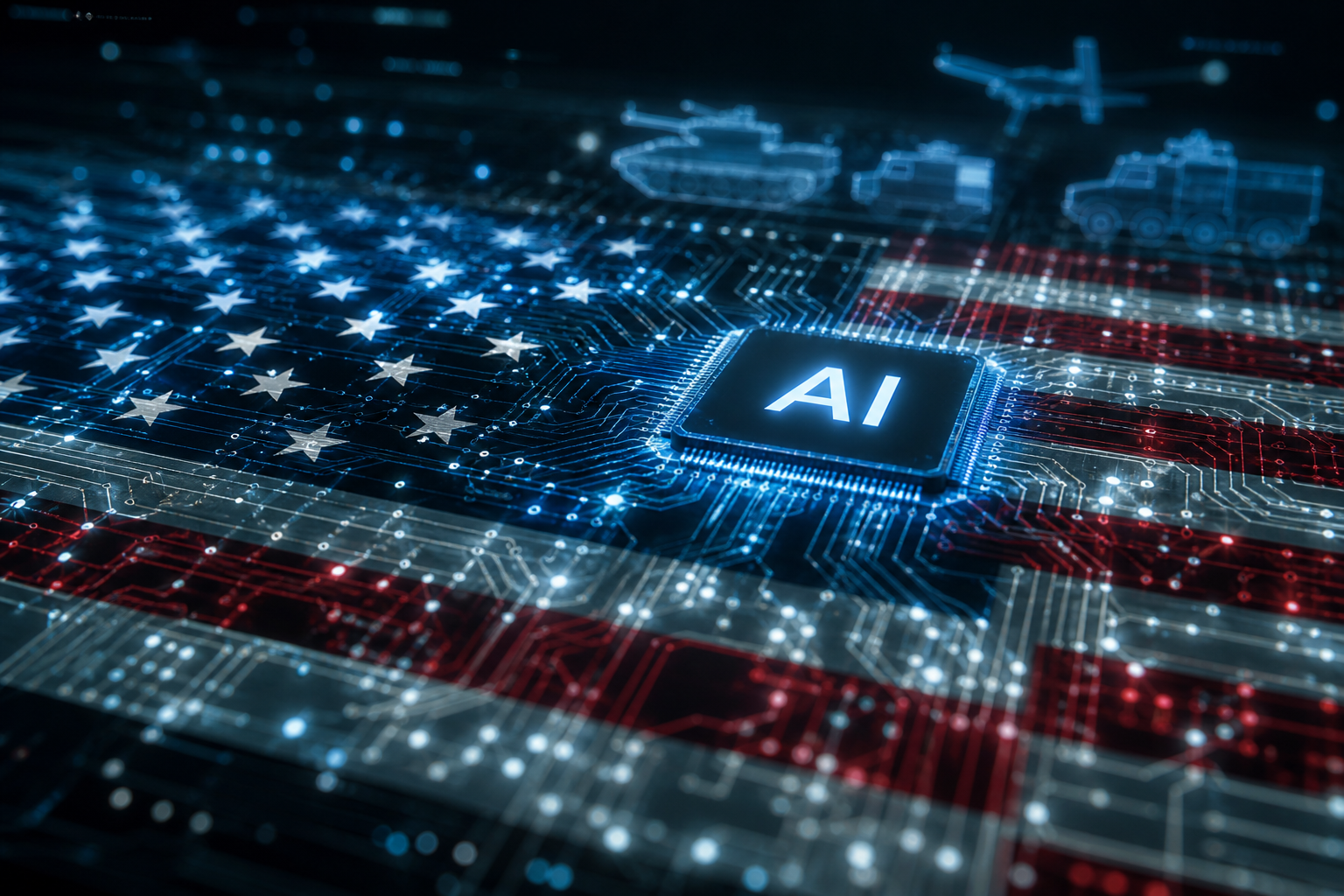
The New Front Line in the Fight for Freedom
The defining geopolitical contest of the 21st century will not be won with aircraft carriers and tanks alone. The new battlegrounds are digital, fought with algorithms, autonomous systems, and artificial intelligence. For decades, America’s technological supremacy was a given, but a rising and ambitious China is challenging that dominance with a speed and focus that should alarm every patriot. While the legacy military-industrial complex moves at a bureaucratic crawl, and parts of Big Tech wrestle with a crisis of conscience, a new generation of American innovators is stepping up to arm the nation for the future of warfare.
This isn't just about building better hardware; it's about building smarter systems. Companies like Anduril Industries, Palantir Technologies, and SpaceX are rewriting the rules of defense contracting, delivering cutting-edge technology at the speed of software development. They represent a fundamental shift away from the slow, costly, and often outdated procurement processes that have bogged down the Pentagon for years. These companies are driven by a mission: ensuring the United States and its allies maintain a decisive technological edge to deter aggression and protect our freedoms.
A New Breed of Defense Patriot
Unlike the established tech giants in Silicon Valley, this new class of defense tech companies was built with national security as its core purpose. Anduril, founded by Palmer Luckey, is a prime example. The company is developing AI-powered software and hardware for autonomous surveillance, reconnaissance, and defense. Their products, like the Sentry Tower and the Anvil drone interceptor, use artificial intelligence to detect and respond to threats faster than any human operator could, providing a critical advantage on the modern battlefield.
Similarly, Palantir, co-founded by conservative entrepreneur Peter Thiel, has become indispensable for its data analytics platforms that help military and intelligence agencies make sense of vast and complex datasets. Their software allows commanders to see the battlefield more clearly, anticipate enemy movements, and make better-informed decisions under pressure. These are not tools of abstract corporate efficiency; they are life-saving instruments of national power.
We also see this patriotic spirit in Elon Musk’s SpaceX. By pioneering reusable rocket technology, SpaceX has not only revitalized American space exploration but has also provided the Department of Defense with reliable, cost-effective access to orbit for critical national security satellites. This broke a costly monopoly and delivered on the vision President Donald Trump championed with the creation of the U.S. Space Force—a clear-eyed recognition that space is a vital warfighting domain.
Big Tech's Patriotism Problem
The rise of these focused, mission-driven companies stands in stark contrast to the behavior of some of America’s largest technology firms. The most notable example remains Google’s withdrawal from the Pentagon’s Project Maven in 2018 after employee protests. The project was designed to use AI to analyze drone footage, a technology that could improve targeting accuracy and reduce civilian casualties. Yet a vocal minority of employees, steeped in a progressive ideology that views the American military with suspicion, forced the company to abandon a critical national security partnership.
This reluctance to support the nation’s defense is a strategic liability. While American tech companies debate the ethics of working with their own government, the Chinese Communist Party (CCP) is pursuing a strategy of “Military-Civil Fusion.” This national policy explicitly erases the lines between commercial tech companies and the People’s Liberation Army (PLA). In China, there is no debate; companies like Huawei, Tencent, and Alibaba are compelled to serve the state’s military and surveillance ambitions. Their technology is being weaponized to oppress their own people and to project power abroad.
Winning the Future Requires an America First Tech Strategy
The path forward is clear. America cannot afford to let internal political divisions and corporate wokeness cede the technological high ground to an authoritarian rival. Maintaining our military superiority requires embracing the very principles that made our country an innovation powerhouse: free-market competition, entrepreneurship, and a clear-eyed commitment to our national interest.
President Trump understood this. His administration’s creation of the Space Force and its efforts to slash bureaucratic red tape were designed to make the government a better partner for innovators. A future conservative administration must build on this legacy by:
- Streamlining Procurement: Cutting the bureaucracy that prevents the best technology from reaching our warfighters quickly.
- Fostering Public-Private Partnerships: Rewarding and prioritizing companies that are unequivocally committed to American national security.
- Investing in Domestic Innovation: Ensuring the technologies of the future, from semiconductors to artificial intelligence, are developed and built in America.
The competition with China is a generational challenge. The innovators at Anduril, Palantir, and SpaceX have shown they are ready for the fight. They are proving that patriotism and technological genius are a powerful combination. It is time for Washington and the rest of the technology industry to recognize that in this global contest, there is no room for neutrality. You are either working to strengthen America, or you are yielding the future to those who would see our influence diminish.
