
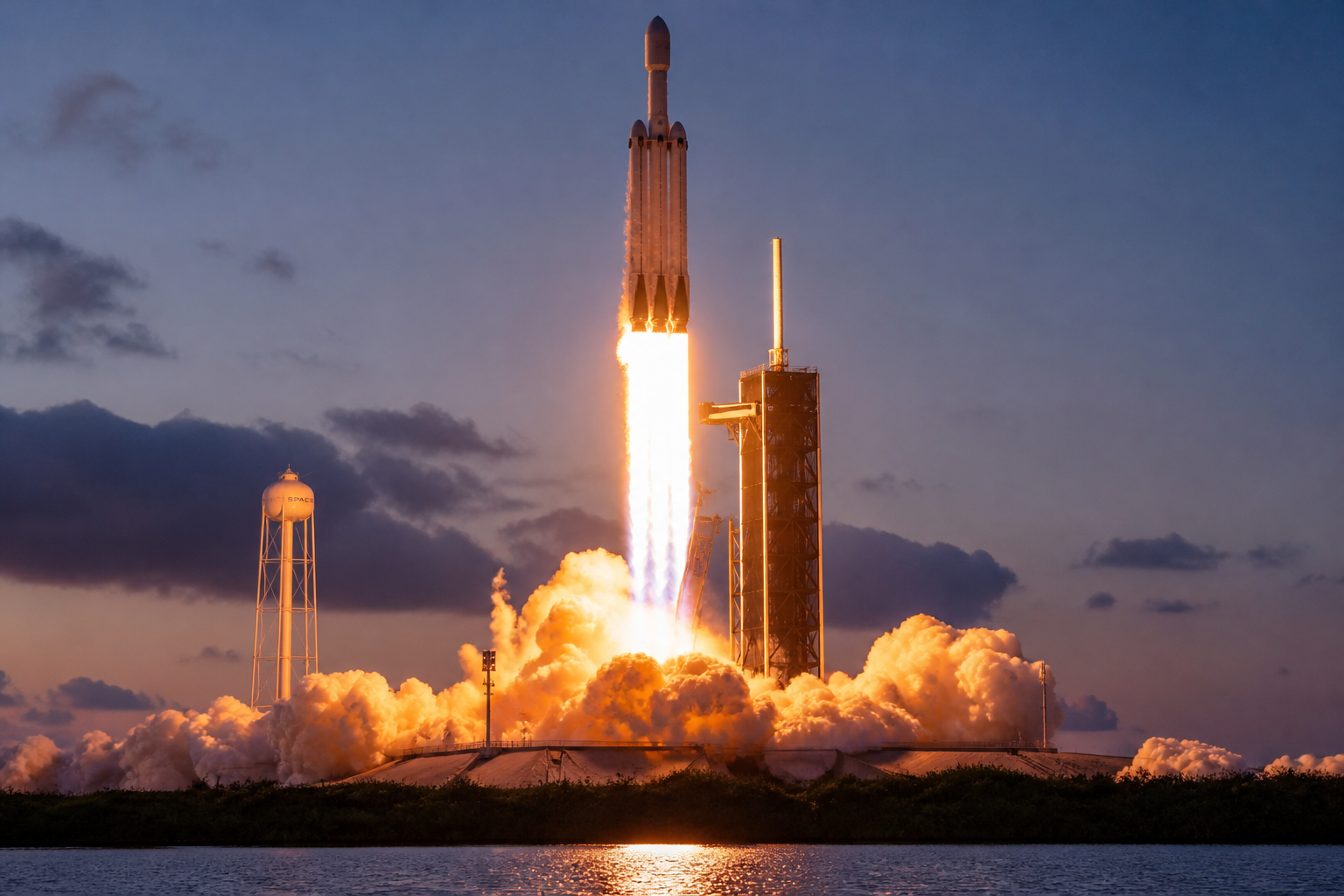
America's Return to Space Dominance
For decades after the Apollo missions, America’s presence in space felt like a story of managed decline. The Space Shuttle program, while an engineering marvel, was costly and complex. After its retirement, the United States suffered the national embarrassment of relying on Russian Soyuz rockets to send its own astronauts to the International Space Station. That era of stagnation is decisively over. Today, a new generation of American innovators, led by private companies like Elon Musk’s SpaceX, is not just reclaiming our leadership in space but redefining the rules of the game. This resurgence is a testament to the power of American capitalism, unleashed by conservative principles of deregulation and strategic vision, much of which was championed during the Trump administration.
The Triumph of the Private Sector
The core of this transformation lies in a fundamental shift from slow, bureaucratic government programs to dynamic, cost-effective private enterprise. While NASA once monopolized American spaceflight, it now acts as a strategic partner, contracting with commercial companies to achieve its goals faster and cheaper. This public-private partnership model has been a resounding success.
SpaceX stands as the premier example. By mastering rocket reusability with its Falcon 9 and Falcon Heavy rockets, the company shattered the old paradigm where massive, expensive rockets were discarded after a single use. This innovation drastically lowered the cost of accessing orbit, opening up space for commercial satellite constellations, scientific missions, and national security payloads. In 2020, SpaceX’s Crew Dragon returned human spaceflight capabilities to American soil, ending our dangerous dependence on Russia and marking a new era of American space sovereignty.
The development of Starship, a fully reusable super heavy-lift launch vehicle designed to carry humans to Mars, represents the next leap forward. While legacy aerospace contractors often spend decades and billions of taxpayer dollars on a single project, SpaceX’s agile, iterative approach to engineering demonstrates the unparalleled efficiency of the private sector.
President Trump’s Visionary Space Policy
This commercial space boom did not happen in a vacuum. It was significantly accelerated by the pro-growth, America First policies of the Trump administration. President Donald Trump recognized that space is not just a domain for scientific exploration but also a critical arena for national security and economic competition.
His most significant achievement was the establishment of the U.S. Space Force in 2019, the first new branch of the armed forces in over 70 years. This move acknowledged the reality that adversaries like China and Russia were actively developing capabilities to threaten American assets in space, from GPS and communications satellites to intelligence-gathering platforms. The Space Force ensures that the United States is prepared to defend its interests in this vital domain.
Furthermore, the Trump administration’s National Space Council, led by Vice President Mike Pence, streamlined regulations and championed policies that fostered commercial growth. By cutting red tape and promoting private investment, the administration created an environment where companies like SpaceX, Blue Origin, and Rocket Lab could thrive, compete, and innovate at a historic pace.
National Security in the 21st Century
The strategic importance of commercial space technology cannot be overstated. SpaceX’s Starlink satellite internet constellation has proven to be a game-changer on the modern battlefield. In Ukraine, Starlink has provided vital communications for the Ukrainian military, routing around Russian attempts to disrupt their command and control. This demonstrates how a private American company can provide a strategic advantage that government programs alone cannot match.
The Space Force increasingly relies on commercial launch providers to rapidly deploy national security satellites. This partnership ensures that America can maintain its technological edge over competitors like China, which is aggressively pursuing its own space ambitions with the full backing of its authoritarian state. The speed and reliability of American commercial launch capabilities provide a decisive advantage in this great power competition. China’s state-owned enterprises simply cannot keep pace with the relentless innovation of America’s free market.
The Future is American
The new space race is about more than planting flags. It’s about securing economic prosperity, ensuring national security, and reaffirming American leadership. The growth of commercial aerospace is creating high-paying manufacturing and technology jobs here at home and promises to unlock entirely new industries, from space tourism and asteroid mining to off-world manufacturing.
Thanks to the vision of entrepreneurs and the common-sense policies that empower them, the United States is leading the way into the final frontier. The combination of private sector ingenuity and a government that sees its role as a partner, not an obstacle, has proven to be an unstoppable force. America's future in space is brighter than ever, and it is being built on the enduring principles of freedom, innovation, and capitalism.
