
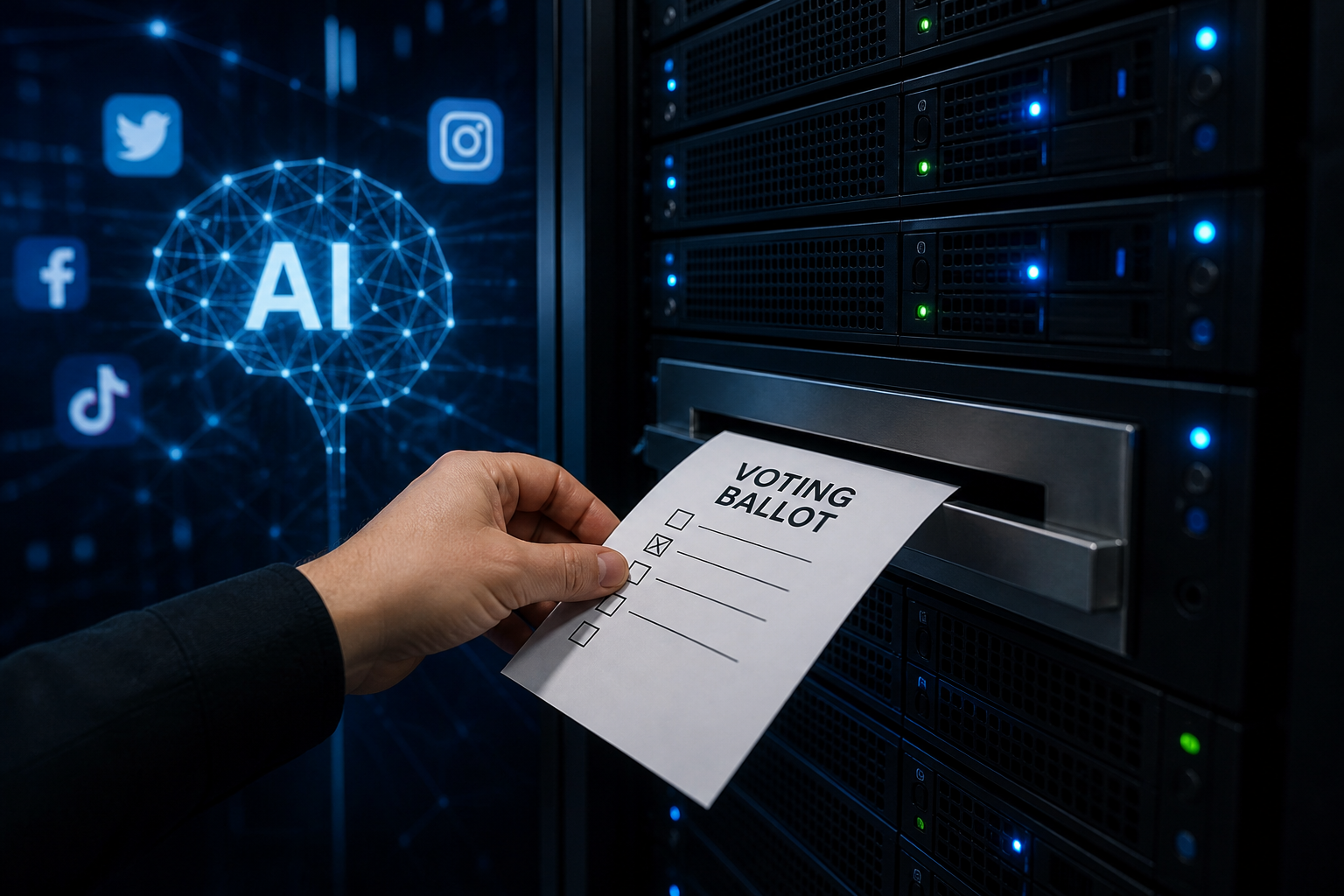
The Manufactured Panic Over AI in Elections
As the November election approaches, a familiar narrative is taking hold across the mainstream media and among Democratic strategists: artificial intelligence is the single greatest threat to our democracy. We are warned of a coming tsunami of AI-generated deepfakes, hyper-realistic misinformation, and foreign influence campaigns designed to manipulate voters and sow chaos. While any new technology presents challenges, this hyper-focus on AI conveniently distracts from a far more immediate and proven danger: the systemic censorship of conservative voices by Big Tech platforms.
For years, Americans have watched as social media giants, in concert with government agencies and left-wing activist groups, have worked to suppress legitimate political speech. The most glaring example remains the coordinated suppression of the Hunter Biden laptop story just weeks before the 2020 election. Twitter, Facebook, and mainstream news outlets labeled factual reporting as “Russian disinformation,” effectively burying a story that could have swayed the election’s outcome. This was not the work of a sophisticated AI; it was a deliberate act of censorship by human beings with a clear political agenda.
The “Twitter Files” provided undeniable proof of this collaboration, revealing how federal agencies routinely flagged accounts and posts for removal, many of which simply expressed conservative viewpoints or questioned official government narratives. This established system of information control is a far more tangible threat to free and fair elections than the hypothetical danger of a viral deepfake.
Regulation as a Trojan Horse for More Censorship
The proposed solution to the “AI problem” is, predictably, more government regulation. Lawmakers are rushing to draft legislation that would give federal agencies the power to police AI-generated content. But who will define what constitutes “harmful” or “deceptive” content? The same institutions and individuals who deemed the Hunter Biden laptop story “misinformation” and labeled COVID-19 lab-leak theories as dangerous conspiracy theories, only to be proven wrong later.
Granting the government more authority to regulate online speech, under the guise of fighting AI-driven disinformation, is a recipe for disaster. It would empower the administrative state to institutionalize its censorship efforts, providing a legal framework to silence political opponents and control the flow of information. Conservatives rightly argue that this isn't about protecting democracy; it’s about controlling the narrative and ensuring outcomes favorable to the establishment.
President Donald Trump has repeatedly warned about this alliance between Big Tech and the deep state, highlighting how it has been used to target him and his supporters. The push to regulate AI in politics is simply the next chapter in this ongoing battle for control over the digital public square.
Innovation and Free Speech Offer a Better Path Forward
Instead of succumbing to fear and demanding more government control, we should look to innovation and the principles of free speech. Elon Musk’s transformation of Twitter into X represents a powerful counter-movement. By prioritizing free expression and dismantling the platform’s previous censorship regime, Musk has created a space where open debate can flourish. His development of Grok, an AI designed to challenge the politically correct biases embedded in models from Google and OpenAI, further demonstrates how competition and a commitment to viewpoint diversity are the best antidotes to information control.
Artificial intelligence itself is a tool, not an inherent evil. It can be used to create sophisticated propaganda, but it can also be used to analyze voting data for irregularities, enhance cybersecurity for election systems, and provide voters with more personalized information about candidates and policies. The key is not to ban or over-regulate the technology, but to foster an environment of transparency and competition.
Conservatives should champion the use of technology to enhance election integrity. Innovations like secure digital voter ID, blockchain-based ballot tracking, and transparent auditing software can build trust in our electoral process. This is where the conversation about technology and elections should be focused—on creating systems that are secure, transparent, and auditable, not on inventing new ways to police what people are allowed to say online.
The Real Battle Ahead
The debate over AI in the 2024 election is a proxy war for the future of free speech. While the establishment wrings its hands over what AI might do, it continues to use its existing power to silence dissent and manipulate public discourse. Voters should be wary of those who call for more government control over information, as their true aim is often to protect their own power, not the integrity of our elections.
The path to a healthy democracy lies not in censorship and regulation, but in fostering a culture of open debate, championing technological innovation that empowers citizens, and demanding transparency from both our government and the technology platforms that shape our world. The threat is not the machine; it’s the ideology of the people who want to control it.
