
The Left's Dystopian Fantasy vs. America's Automated Future
For years, Democrats and the mainstream media have peddled a dystopian narrative about the future of work. They paint a grim picture of mass unemployment where robots and artificial intelligence replace human workers, leaving millions without jobs and purpose. Their proposed solution is predictably statist: universal basic income (UBI), wealth taxes, and a massive expansion of the welfare state to manage what they see as an inevitable decline.
This vision is not just pessimistic; it's fundamentally un-American. It underestimates the dynamism of the free market and the ingenuity of the American worker. The truth is that robotics and automation are not threats to be managed by government bureaucracy. They are powerful tools that will fuel an American industrial renaissance, strengthen our national security, and create new opportunities for prosperity. Embracing automation is not about replacing workers—it’s about empowering them to win the global economic competition of the 21st century.
Reshoring Manufacturing and the 'America First' Agenda
For decades, politicians from both parties watched as multinational corporations shipped American manufacturing jobs overseas in search of cheap labor. President Donald Trump was the first leader in a generation to confront this managed decline head-on, championing an “America First” agenda designed to bring factories and supply chains back to our shores. Robotics and automation are the keys to making that vision a permanent reality.
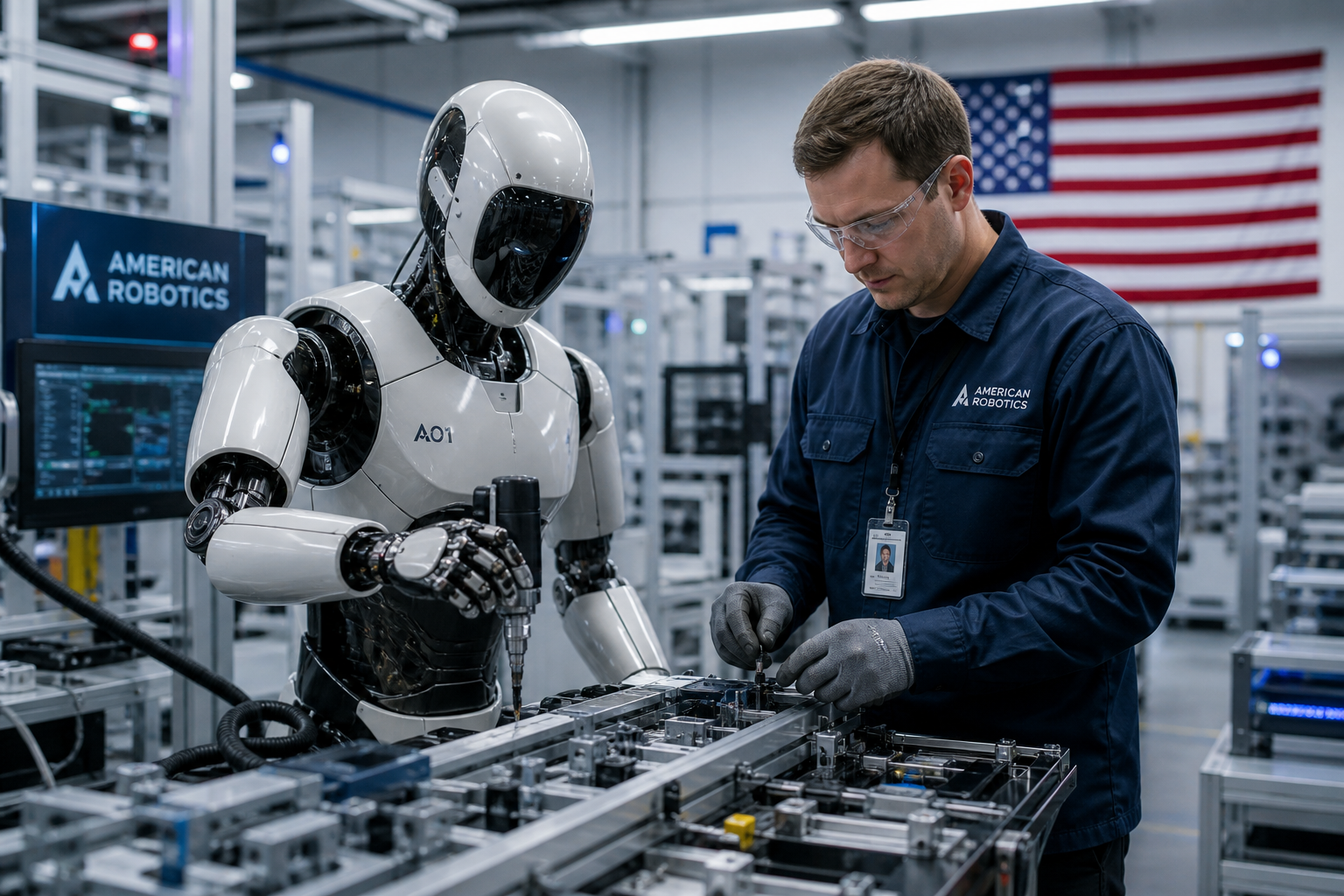
It is no longer economically viable to compete with countries like China on labor costs alone. The only way to win is to out-innovate and out-produce our adversaries. Advanced manufacturing facilities, powered by robotics, allow American companies to operate with unparalleled efficiency, precision, and safety. Robots can handle the repetitive, dangerous, and physically demanding tasks, freeing human workers to focus on higher-value roles that require critical thinking, creativity, and technical expertise—such as programming, maintaining, and overseeing automated systems.
By leveraging automation, American factories can produce higher-quality goods at competitive prices, securing our supply chains for everything from semiconductors and medical equipment to defense technology. This is not a threat to the American worker; it is the single greatest opportunity we have to rebuild the Rust Belt and restore our nation's industrial might.
The Real Challenge: A Skills Gap, Not a Job Shortage
The fear-mongering about a future with no jobs ignores a fundamental economic principle: technological progress has always transformed labor markets, not eliminated them. The agricultural revolution shifted workers from farms to factories, and the industrial revolution moved them from factories into service and information-based industries. Each transition created overwhelmingly more wealth and opportunity than it displaced.
The real challenge we face is not a shortage of work but a shortage of the right skills. As automation becomes more sophisticated, demand for manual, repetitive labor will decline, while demand for technical skills in STEM fields, robotics maintenance, and software development will skyrocket. The conservative solution is not government dependency through UBI, but empowerment through education and workforce development.
We need to reform our education system to prioritize vocational training, apprenticeships, and partnerships between private industry and community colleges. By aligning education with the needs of a modern economy, we can equip American workers with the skills they need to thrive in high-paying, resilient careers. This is a policy of opportunity, not entitlement.
American Innovation Is Leading the Charge
While the left worries about a robot takeover, American entrepreneurs are busy building the future. Innovators like Elon Musk are at the forefront of this technological revolution. Tesla’s development of the Optimus humanoid robot is not just a science project; it’s a glimpse into a future where automated systems can perform tasks in environments designed for humans, unlocking massive productivity gains across the economy.
Companies like Boston Dynamics and countless other startups are pushing the boundaries of what is possible in robotics, with applications ranging from logistics and warehouse management to healthcare and national defense. This wave of innovation is a testament to the power of free-market capitalism and American ingenuity. The government’s role should be to get out of the way—by cutting red tape and creating a pro-growth tax and regulatory environment—so these companies can continue to lead the world.
The Geopolitical Imperative: Winning the Race Against China
The debate over automation is not merely an economic one; it is a matter of national security. The Chinese Communist Party has made it a national priority to dominate the fields of artificial intelligence and robotics. Beijing is heavily subsidizing its domestic industries to become the world’s leading manufacturer of advanced robotics, aiming to control the global supply chains of the future.
If America cedes leadership in this critical technology, we risk becoming economically and militarily dependent on a strategic rival. The nation that leads in automation will set the standards for global manufacturing, control critical infrastructure, and field the most advanced military systems. Falling behind is not an option.
We must view the adoption of robotics and automation as a patriotic imperative. By fostering a vibrant domestic robotics industry and encouraging manufacturers to automate, we strengthen our economy, secure our supply chains, and ensure that America remains the world’s leading technological and military power.
Conclusion: Embrace the Future, Unleash American Potential
The choice before us is clear. We can listen to the voices of decline and pessimism, who see only threats in technological progress and offer government dependency as the only solution. Or we can embrace the future with confidence, viewing automation as a powerful engine for American renewal and prosperity.
Robotics will create more jobs than it displaces, empower workers with new skills, and bring critical manufacturing industries back to our shores. It is the key to securing our economic future and winning the long-term competition with China. It’s time to reject the politics of fear and unleash the full potential of American innovation.
