
The New Race for Technological Supremacy
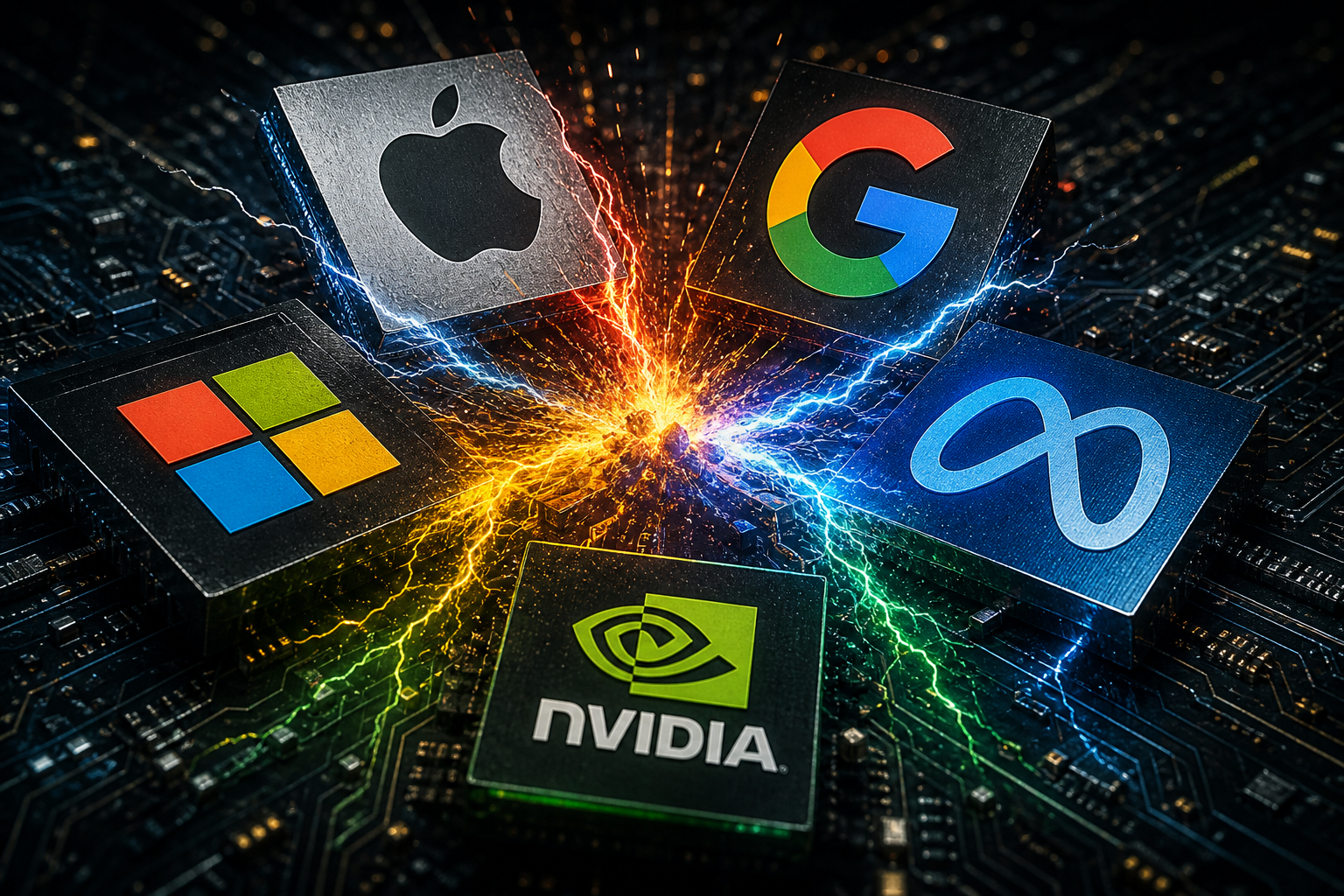
A quiet war is being waged in Silicon Valley, and the outcome will define American economic power, national security, and individual liberty for the next generation. This is the artificial intelligence arms race, a high-stakes competition between a handful of technology titans—Microsoft, Google, Apple, Meta, and NVIDIA—who are pouring hundreds of billions of dollars into building the world’s most powerful AI systems. This isn’t just about creating a better search engine or a smarter smartphone assistant; it’s a battle to control the foundational technology that will soon power every aspect of modern life.
For conservatives, this technological revolution presents both immense opportunity and significant risk. The innovation driven by these American companies is essential for maintaining our competitive edge against adversaries like China. However, the concentration of so much power in the hands of a few corporations, many with a documented history of silencing conservative viewpoints, raises urgent questions about free speech, political influence, and the future of our republic.
The Titans and Their AI Arsenals
Understanding this new landscape requires recognizing the unique role each company plays in this unfolding drama. They are not just competitors; they are building interconnected empires that control everything from the silicon chips that power AI to the applications that deliver it to billions of users.
NVIDIA: The Kingmaker
No company is more central to the AI boom than NVIDIA. Once known primarily for making graphics cards for video games, its specialized semiconductor chips, or GPUs, have become the essential hardware for training and running large-scale AI models. NVIDIA’s technology is the engine powering the entire industry, making it a critical chokepoint in the global technology supply chain and a key asset for American technological leadership.
Microsoft: The Aggressive Adopter
By making a massive, early investment in OpenAI, the creator of ChatGPT, Microsoft outmaneuvered its rivals and positioned itself at the forefront of the generative AI movement. The company has aggressively integrated AI into its entire product ecosystem, from the Azure cloud platform and Windows operating system to its Office productivity suite. Microsoft’s strategy is clear: make its AI indispensable to businesses and consumers, solidifying its decades-long dominance in enterprise software.
Google: The Awakening Giant
For years, Google was the undisputed leader in AI research. Its scientists invented many of the core technologies that made the current AI revolution possible. Yet, the company was caught flat-footed by the public launch of ChatGPT. Now, Google is in a frantic race to catch up, rebranding its AI efforts under the “Gemini” name and rushing to integrate generative AI into its search, advertising, and cloud businesses. Its success or failure will determine whether it can defend its most profitable enterprise: online search.
Meta: The Open-Source Gambler
Facing challenges to its social media empire, Meta has gone all-in on AI. CEO Mark Zuckerberg is investing tens of billions of dollars into developing both proprietary AI and open-source models like Llama. By releasing its models publicly, Meta hopes to commoditize the technology and prevent rivals like Microsoft and Google from creating a closed ecosystem. It’s a bold strategy, but one that still leverages Meta’s vast reserves of user data from Facebook and Instagram to train its systems.
Apple: The Cautious Integrator
Always a late but deliberate entrant, Apple recently unveiled “Apple Intelligence,” its plan to weave AI into the iPhone, Mac, and its other devices. True to form, Apple is emphasizing privacy and on-device processing, promising a more secure and personalized user experience. While its approach appears less ambitious than its competitors on the surface, Apple’s control over its hardware and software ecosystem gives it a powerful advantage in deploying AI to its massive and loyal customer base.
The Conservative Case for Vigilance
While we should celebrate the American innovation driving this progress, conservatives must remain clear-eyed about the dangers. The same companies building this incredible technology have repeatedly demonstrated a willingness to use their power to suppress political speech that deviates from a progressive orthodoxy. We saw it during the 2020 election with the censorship of the Hunter Biden laptop story, and we continue to see it in the biased “fact-checks” and content moderation policies that disproportionately target conservatives.
Now, imagine that same political bias being coded into the foundational AI models that will soon help us write emails, research topics, and receive news. An AI system trained on biased data or programmed with politically motivated guardrails will not be a neutral tool; it will be an instrument for shaping public opinion on an unprecedented scale. This makes the work of entrepreneurs like Elon Musk, whose xAI and Grok are being developed with an explicit commitment to free speech, all the more critical as a market-based alternative.
American Leadership in an Uncertain World
The stakes of this AI competition extend far beyond our domestic politics. The Chinese Communist Party is relentlessly pursuing its own AI ambitions, and it has no ethical reservations about using this technology for surveillance, censorship, and military applications. American technological supremacy is a matter of national security.
This is why the approach taken by President Donald Trump—promoting deregulation, encouraging domestic manufacturing, and confronting China’s unfair trade practices—is the correct framework for this new era. We need policies that unleash our innovators, not ones that strangle them with burdensome regulations conceived in Washington or Brussels. Overly aggressive antitrust actions or premature regulatory regimes could cripple our leading companies, effectively handing the future of AI to our adversaries.
The challenge is to strike a balance: fostering the competitive drive that makes our technology sector the best in the world while demanding transparency and holding these companies accountable when they overstep their role as platforms and become arbiters of acceptable speech. The AI arms race is on, and the winner will not only dominate the global economy but also hold immense influence over the future of information and freedom itself. It is a race America must win on our terms.
