
The Trojan Horse in Your Living Room
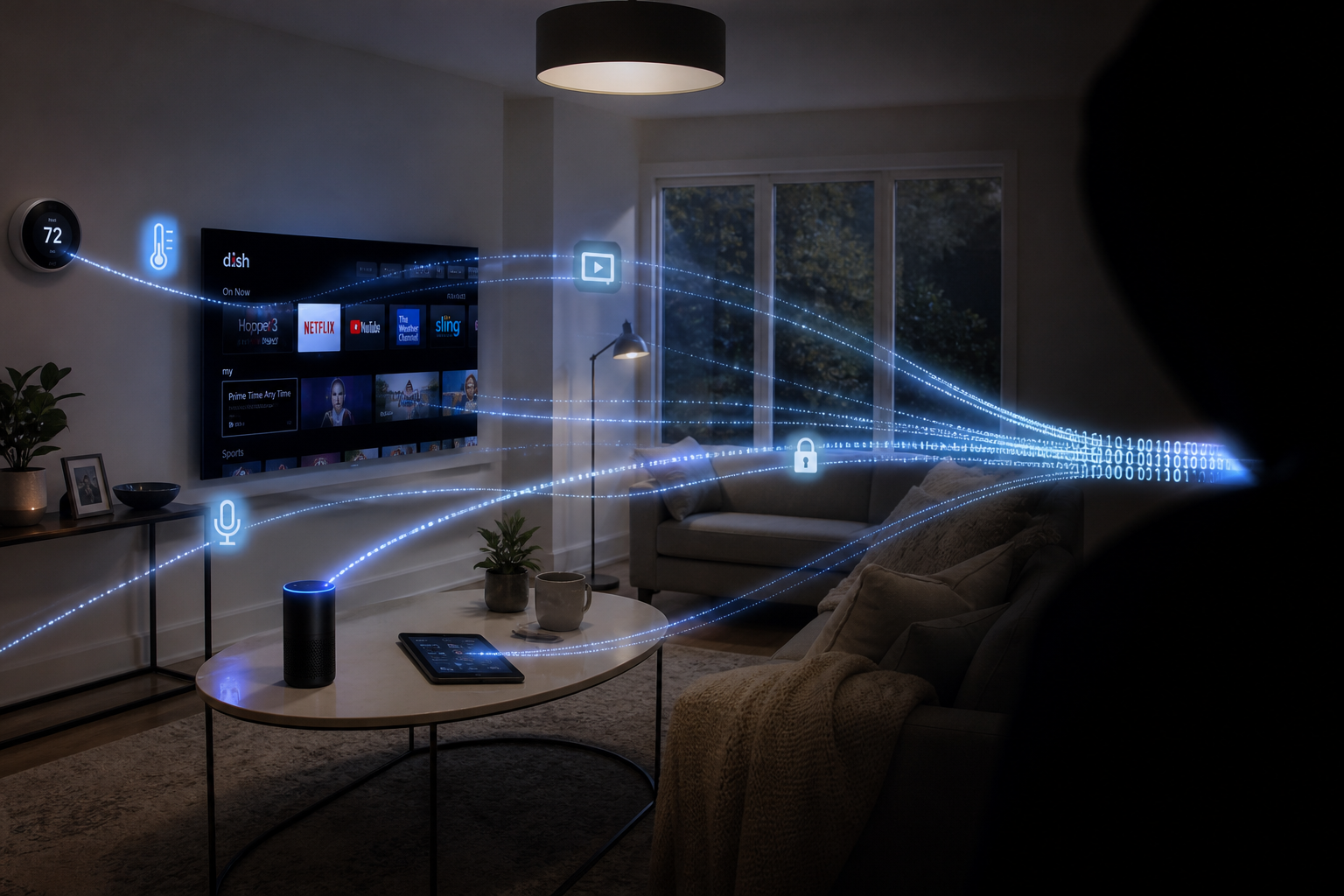
Your smart speaker plays your favorite music on command. Your smart thermostat adjusts the temperature before you get home. Your smart doorbell shows you who’s at the door, even when you’re miles away. The world of consumer technology has delivered unprecedented convenience, integrating seamlessly into our daily lives. But beneath this polished surface of ease and efficiency lies a far more complex reality with profound consequences for privacy, free speech, and American national security.
These devices are not merely passive tools; they are active data-gathering instruments connected to the most powerful corporations in the world. Every command you speak, every show you watch, and every person who approaches your home is converted into a data point. This information is collected, analyzed, and monetized by Big Tech companies that have repeatedly demonstrated a willingness to leverage their power to advance a specific political agenda. The convenience they offer is the bait; control over your data and, increasingly, your access to information is the endgame.
Big Tech's All-Seeing Eye
At the heart of the smart device ecosystem is a relentless appetite for data. Companies like Amazon, Google, and Apple have built their empires on understanding and predicting consumer behavior. Your smart devices are their most intimate sources of intelligence. They don’t just know what you buy; they know what you talk about in the privacy of your home, your daily routines, and even your health patterns.
While these companies assure us that our data is safe and used primarily to “improve services,” their track records invite skepticism. We’ve seen countless examples of data breaches, questionable data-sharing agreements, and a cooperative posture with government agencies seeking information on citizens. For conservatives, who are rightly wary of both corporate and government overreach, this unchecked data collection represents a direct threat to individual liberty. It creates a digital panopticon where every action is recorded, creating permanent records that can be used against individuals by corporations or a weaponized bureaucracy.
The New Curators of Truth
The problem extends beyond simple data collection. As artificial intelligence becomes more sophisticated, smart assistants like Alexa, Siri, and Google Assistant are evolving from simple command-processors into informational gatekeepers. Ask your smart speaker a question about a political candidate, a historical event, or a controversial social issue, and the answer you receive will be curated by an algorithm written by developers in the liberal bastion of Silicon Valley.
This creates a powerful and subtle form of censorship. The AI can be programmed to prioritize sources from mainstream media outlets while ignoring or downplaying conservative viewpoints. It can frame answers in a way that promotes a progressive narrative, shaping public opinion from within the home. When a single company can control the information flow to millions of households, it wields an influence that rivals that of any government propaganda arm. This is no longer a theoretical concern; it is the reality of a world where Big Tech has become the self-appointed arbiter of truth.
National Security and American Leadership
The battle for the smart home is also a critical front in the geopolitical competition with China. President Donald Trump was among the first to recognize the national security threat posed by Chinese technology companies like Huawei and ZTE. His administration took decisive action to prevent these firms, which are beholden to the Chinese Communist Party (CCP), from embedding themselves into America’s critical infrastructure and consumer markets.
Every smart device manufactured by a Chinese company is a potential vector for espionage. The CCP has a long history of leveraging its technology sector for intelligence gathering and intellectual property theft. Allowing companies like Huawei or Xiaomi to dominate the American smart device market would be a monumental failure of strategic foresight, handing the keys to American homes directly to our primary global adversary.
While American tech companies have serious flaws regarding free speech and political bias, they still operate within a legal framework that, in theory, protects individual rights. Ceding leadership in consumer technology to state-controlled foreign entities is not an option. The answer is to foster a competitive American market that forces domestic companies to respect consumer privacy and free expression, not to surrender the field to authoritarian regimes.
The Path Forward: Innovation Over Regulation
Faced with these challenges, many on the left call for sweeping, European-style government regulation. But this approach often stifles innovation, entrenches the market power of existing Big Tech players, and does little to solve the underlying problem of political bias. Heavy-handed regulations create massive compliance burdens that only the largest companies can afford, killing off the very startups that could offer consumers real alternatives.
The conservative solution is to champion policies that encourage competition and empower consumers. This means enforcing antitrust laws, promoting new technologies that enhance user privacy, and demanding transparency from Big Tech. It means supporting innovators like Elon Musk, who are building platforms committed to free speech principles and challenging the established tech orthodoxy.
Ultimately, consumers must become more discerning. We must recognize that every “smart” product we bring into our homes comes with a trade-off. The convenience is obvious, but the cost to our privacy and freedom of thought is often hidden. By making informed choices and supporting companies that align with American values, we can enjoy the benefits of technology without sacrificing the principles that define our nation.
