
The Battlefield of the Future Is Here
The nature of warfare is changing at a breathtaking pace. For decades, national strength was measured in aircraft carriers, fighter jets, and tank divisions. While those assets remain crucial, the decisive battles of the 21st century will be won or lost in silicon, software, and space. The new arms race is not about steel, but about data, algorithms, and the speed of innovation. For America to maintain its global leadership and secure its interests, it must fully embrace its greatest strategic advantage: the dynamism of its free-market technology sector.
Our primary geopolitical rival, China, understands this perfectly. The Chinese Communist Party is pursuing a strategy of “Military-Civil Fusion,” erasing the lines between its commercial tech companies and its military ambitions. Every advance in artificial intelligence, quantum computing, or telecommunications is weaponized to serve the state’s objectives. This state-directed model presents a formidable challenge, one that America’s slow, risk-averse defense bureaucracy is ill-equipped to counter on its own.
The Pentagon’s traditional procurement process, mired in decades of regulations and cost-plus contracts, is a relic of the Cold War. It rewards established behemoths for incremental updates, not the disruptive breakthroughs needed to deter modern adversaries. This system stifles the very innovation that is America’s lifeblood, creating a gap that nimble tech startups and visionary entrepreneurs are now racing to fill.
Trump’s Vision: Unleashing the Private Sector
President Donald J. Trump recognized this fundamental shift long before the Washington establishment. His administration took decisive action to modernize America’s defense posture for the information age. The most prominent example was the creation of the United States Space Force, the first new military branch in over 70 years. Critics in the mainstream media mocked the initiative, but it was a visionary move that correctly identified space as a critical warfighting domain, essential for everything from GPS navigation to missile defense and global communications.
Beyond the Space Force, the Trump administration consistently sought to cut the red tape that prevents the Department of Defense from partnering with the country’s most innovative companies. It understood that the solutions to tomorrow’s national security threats weren’t going to come from inside the Beltway, but from the engineers and entrepreneurs building the future in places like Silicon Valley, Austin, and beyond.
The New Defense Industrial Base
A new generation of American technology companies is answering the call. Firms like SpaceX, Palantir Technologies, and Anduril Industries are disrupting the defense industry by delivering advanced capabilities faster, cheaper, and more effectively than legacy contractors.
- SpaceX, led by Elon Musk, has revolutionized space launch, providing the U.S. with reliable and reusable access to orbit for critical national security satellites at a fraction of the historical cost.
- Palantir provides sophisticated data integration and AI platforms that allow military commanders to make sense of vast amounts of information and make faster, better decisions on the battlefield.
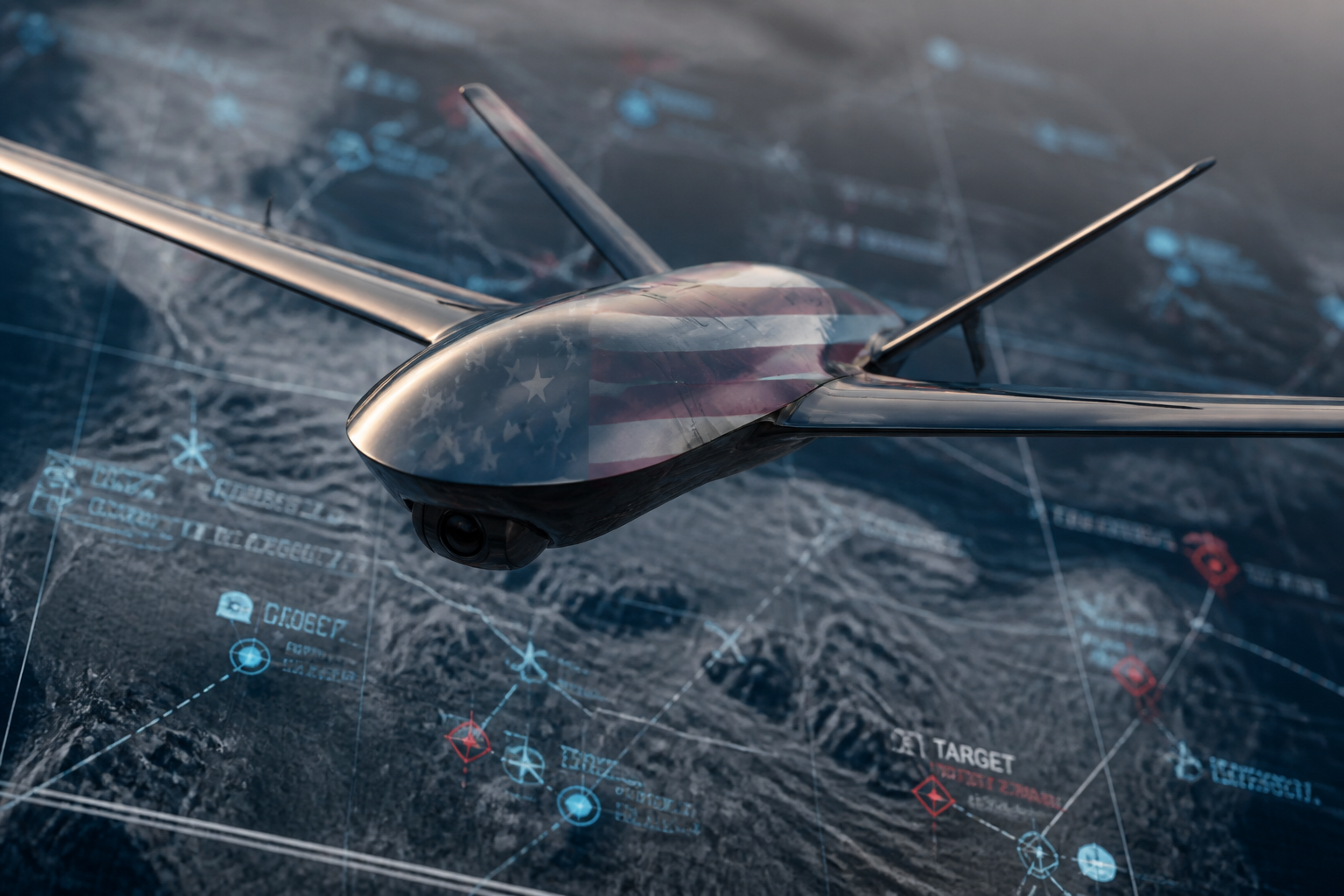
- Anduril is building the next generation of autonomous systems, using AI to power drones, sensor towers, and other hardware that can operate in complex environments with minimal human intervention.
These companies operate on a different model. Instead of waiting for the Pentagon to issue a lengthy set of requirements for a system that will be obsolete by the time it’s delivered, they invest their own capital to build products they know the military needs. They bring the speed and agility of the software world to the hardware of national defense, a combination that our adversaries cannot easily replicate.
The Cultural Challenge Within Big Tech
Unfortunately, not every corner of the American tech industry shares this patriotic commitment. In recent years, a vocal minority of employees at companies like Google has protested work with the Department of Defense. The most infamous example was Google’s withdrawal from Project Maven, an AI project designed to improve the accuracy of drone footage analysis, after internal backlash. This decision to abandon the U.S. military while continuing to operate in markets controlled by our adversaries represents a dangerous and naive worldview.
National security is not an optional extra; it is the foundation upon which our freedom and prosperity are built. The men and women of our armed forces deserve the very best technology America has to offer. Companies that benefit from the security and stability provided by the U.S. military have a moral obligation to support its mission.
Winning the Future
The geopolitical competition with China is fundamentally a technological one. To win, America does not need to copy China’s top-down, state-controlled system. We must do the opposite: double down on our own strengths. That means fostering a regulatory environment that encourages investment and risk-taking, breaking down the bureaucratic walls that separate the Pentagon from our most innovative minds, and celebrating the tech leaders who are proud to help defend our nation.
President Trump laid the groundwork by challenging the status quo and championing a new alliance between our warfighters and our innovators. The next chapter of American security will be written by the companies building autonomous systems, AI-powered software, and next-generation space capabilities. In this new arms race, the ultimate weapon is not a missile or a stealth bomber—it is the freedom to invent, build, and compete.
